1963 Mustang II Concept: The Missing Link to the Original Pony Car
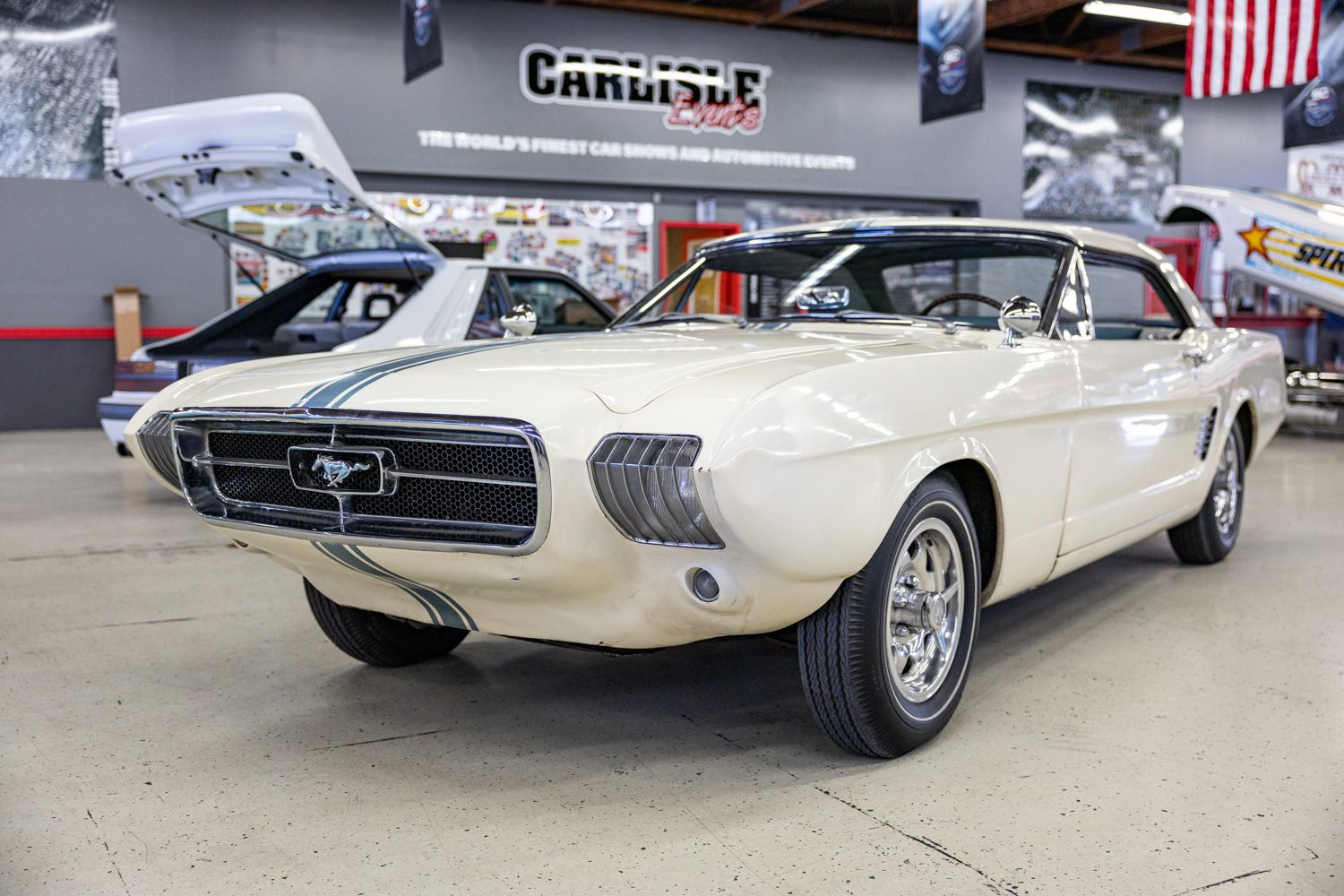
Every Mustang fan knows the story of April 1964, when Ford pulled the wraps off the production Mustang and changed the muscle car landscape forever. Far fewer know about the car that quietly set the stage months earlier. The 1963 Mustang II Concept is one of the most important Mustangs that almost nobody talks about, and getting to see the surviving example in person was a real treat for us while at the 2025 Carlisle Ford Nationals.

Why Ford Needed a Second Concept
To understand the Mustang II, you have to start with the Mustang I. That mid-engine, two-seat roadster debuted at Watkins Glen in October 1962 and the public went absolutely wild for it. Magazines gushed. Letters poured into Dearborn begging Ford to build it. There was just one problem: Ford had already decided the production Mustang would be a four-seat, Falcon-based car aimed at the masses, not a low-slung two-seat sports car.
That left Lee Iacocca and his team with a tricky situation. The public had fallen in love with a car Ford was never going to sell. How do you walk that excitement toward a very different production model without losing the momentum? The answer was to build a bridge.
Design Vice President Gene Bordinat tapped stylist John Najjar to create a new concept that looked far closer to the real thing. The result was the Mustang II, a four-seat preview built to ease the public into the idea of a roomier, more practical pony car while keeping the hype alive.


Built From the Real Thing
Here is the detail that makes the Mustang II so fascinating. It was not a fantasy design study built from scratch. The concept was constructed using an actual preproduction Mustang body, then heavily modified by Dearborn Steel Tubing, the same kind of specialty shop Ford leaned on for show and racing work.
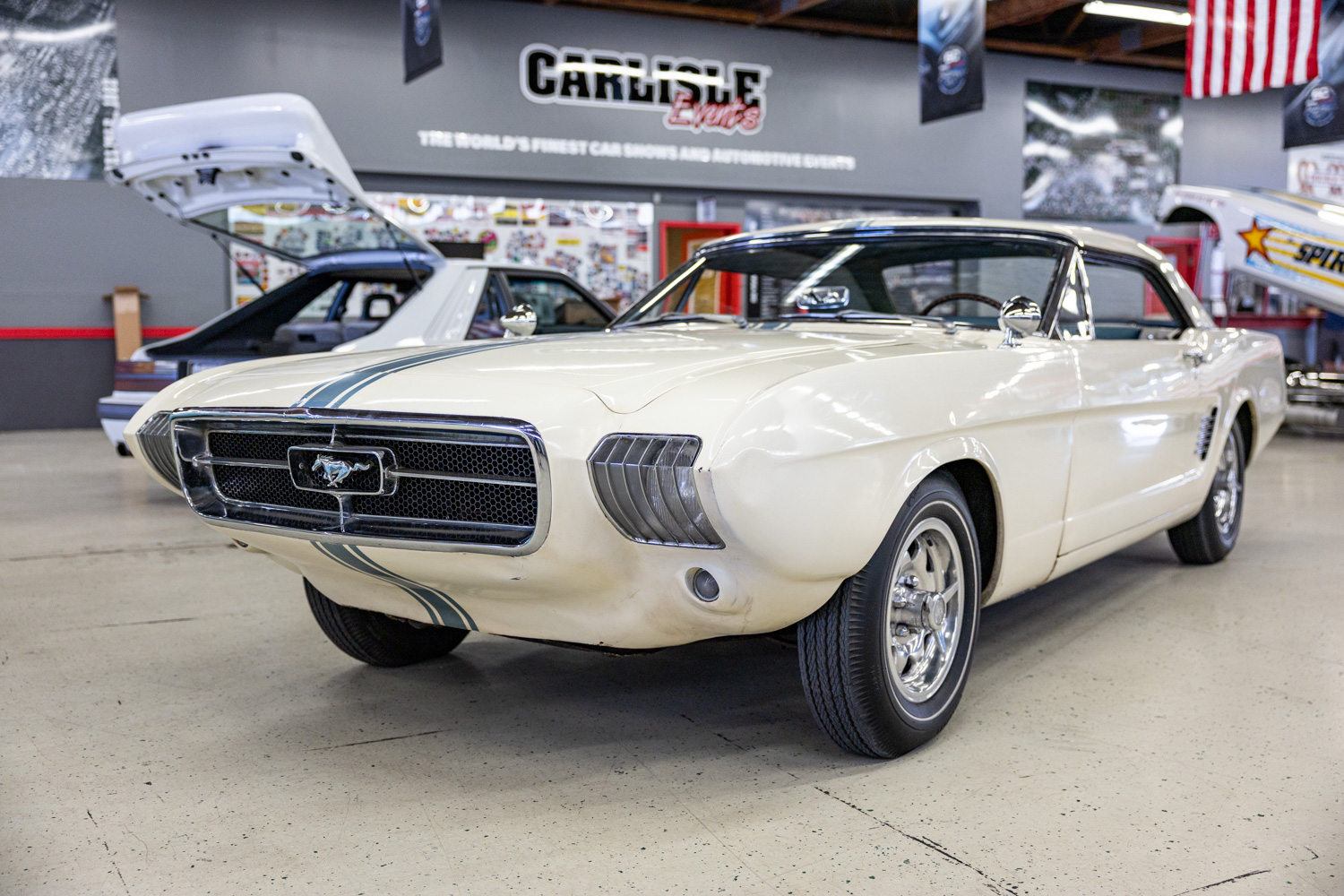
Najjar’s team stripped off the front and rear bumpers, reworked the headlight and grille treatment, and chopped the windshield to sit lower and more aggressively raked. The body ended up roughly five inches longer and three inches lower than the car that would reach showrooms. A removable fiberglass hardtop was fitted, though the Mustang II is most often remembered as a roadster with the top off.
Crucially, the production car’s signature cues were still there for sharp-eyed fans: the C-shaped side sculpting, the tri-bar taillights, and the 108-inch wheelbase that would carry over to the 1965 production Mustang. Ford also tied the concept back to its predecessor by painting it white with blue racing stripes, a direct nod to the Mustang I.


A Show Car With a Short, Hardworking Life
The Mustang II made its formal debut at Watkins Glen in October 1963, on the eve of the United States Grand Prix, deliberately echoing the Mustang I’s launch at the very same event one year earlier. At the press conference, Iacocca described it as one of a series of idea cars built to test public reaction, though in truth, the production Mustang was already locked in. The concept’s real job was to build anticipation and soften the public’s expectations for a four-seat car.
It worked beautifully. When the production Mustang arrived six months later, almost nobody complained about the extra seats. After its time on the auto show circuit, the Mustang II was put to work as a test mule, the unglamorous fate of many concepts. The sole surviving example still exists today, preserved by the Detroit Historical Museum, which is exactly why seeing it out at an event like Carlisle is such a rare opportunity.

Why It Still Matters
Conceptually and physically, the Mustang II is the literal missing link between the wild Mustang I and the production car that launched an empire. Without it, the leap from a mid-engine two-seater to a practical four-seat coupe might have felt jarring. Instead, Ford gave fans a taste of what was coming and let the excitement carry straight into one of the most successful launches in automotive history. The next time someone tells you the Mustang story started in April 1964, you will know the real groundwork was laid right here.