King of the Mountain: Ford’s Super Mustang Mach-E Takes Overall Victory at Pikes Peak
The mountain decided differently this time.
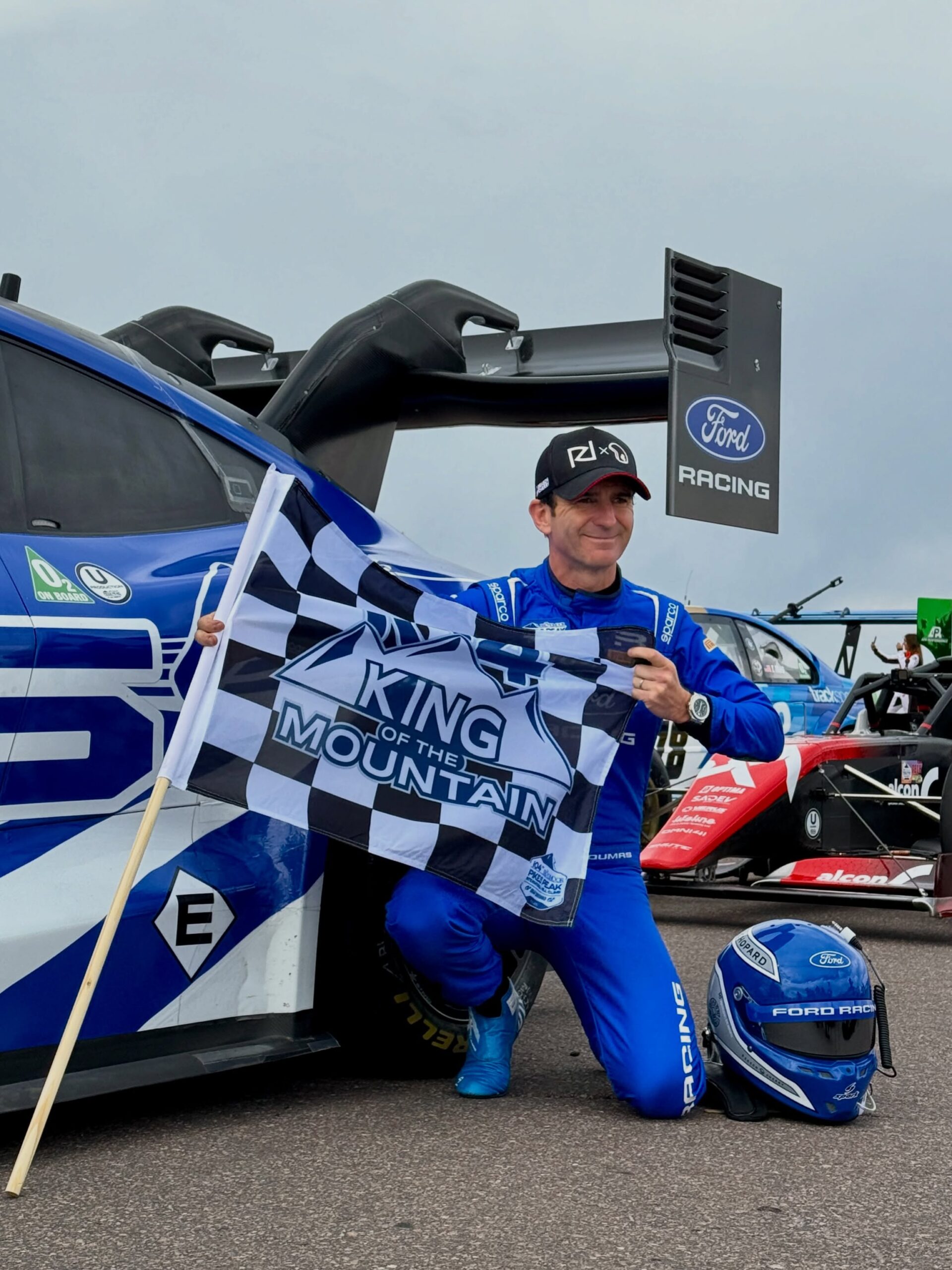
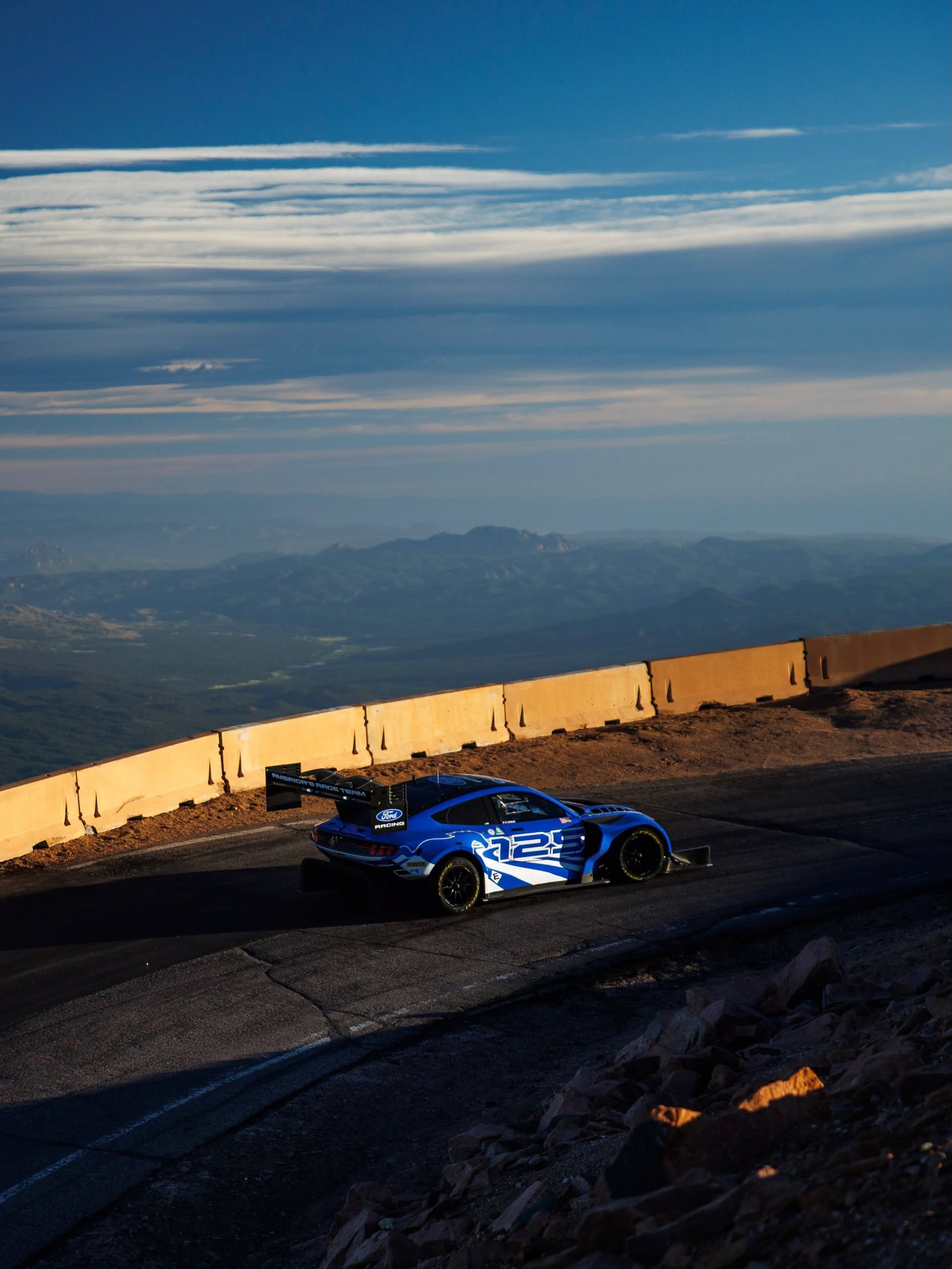
One year after coming agonizingly close, Ford’s Super Mustang Mach-E stormed to the top of Pikes Peak today and claimed the outright win at the 104th running of the Pikes Peak International Hill Climb. Behind the wheel was Romain Dumas, who piloted the 1,400-plus horsepower electric monster to a time of 8:18.202, fast enough to be crowned King of the Mountain for the sixth time in his career.
This wasn’t a class win. This wasn’t “best in category.” This was the fastest car up America’s most punishing mountain, full stop. And for the Mustang faithful, it’s a moment worth savoring.
Images sourced from: Ford Racing
What Exactly Is Pikes Peak?
If you’ve never followed the Hill Climb, here’s why it earns the nickname “The Race to the Clouds.”
Pikes Peak is a flat-out sprint up a Colorado mountain, run against the clock, one car at a time. The course stretches nearly 12.5 miles and winds through 156 corners on a fully paved ribbon of asphalt with no guardrails and very little margin for error. Drivers launch from a starting line already sitting at roughly 9,390 feet of elevation and finish at the 14,115-foot summit. The grade averages around 7 percent the entire way up.
The event has been held since 1916, making it one of the oldest motorsport races on the planet. For most of its history, large portions of the course were loose dirt and gravel. Even now that it’s fully paved, cars still leave the road, slide into the trees, and occasionally tumble down the mountainside. People have died here. The teams take the danger very seriously, and so should anyone watching.
Then there’s the altitude, which is the real villain of the story. As cars climb higher, the air gets dramatically thinner. Gasoline engines lose massive amounts of power up top because combustion needs oxygen, and there simply isn’t much of it near the summit. Weather is the other wildcard. Rain, snow, fog, and brutal high-altitude winds can roll in without warning and force officials to shorten or stop the race entirely.

Why This Win Is Genuinely Insane
A few things make today’s result far more impressive than a simple “Ford won a race” headline.
First, electric power is the great equalizer at altitude, and that cuts both ways for the story. Because EVs don’t rely on oxygen for combustion, they don’t lose power as they climb. That advantage is exactly why the all-time overall record at Pikes Peak, a 7:57.148 set back in 2018, belongs to an electric car, the Volkswagen ID.R. The driver of that record run? Also Romain Dumas. The man knows this mountain better than almost anyone alive.

Second, this was redemption. Last year, the Super Mustang Mach-E showed up with the same goal and got robbed by the weather. High winds closed the top half of the course, the race was shortened, and the Mach-E was forced to win only its class while losing the overall to an ultralight prototype. Dumas said afterward that his Ford likely would have had the edge if the full course had been open, because the thin air up top favors electric power. He also offered a more philosophical take: the mountain decides. Today, with the entire course open, the mountain decided in Ford’s favor.
Third, and this is the part that should make Mustang fans grin, the Super Mustang Mach-E did not beat a field of street cars. It beat purpose-built, no-compromise hill climb weaponry. The Mach-E finished more than 11 seconds clear of second place, an ultralight open-wheel formula-style machine. Last year’s overall winner, Simone Faggioli in the featherweight Nova Proto NP01 prototype, had to settle for third after a technical issue on his run. Beating cars built from a blank sheet of paper specifically to attack this mountain, in something wearing a Mustang badge, is a remarkable achievement.
Breaking Down the Run
The live timing tells the story of a clean, relentless climb. Here’s how Dumas split the four sections on his way to the summit:
| Section | Split Time |
|---|---|
| Section 1 | 1:27.913 |
| Section 2 | 2:00.277 |
| Section 3 | 2:22.551 |
| Section 4 | 2:27.461 |
| Total | 8:18.202 |
That works out to an average speed of 86.712 mph across the entire 12-plus mile climb, which is staggering when you remember it’s all corners, all uphill, and all run in air thin enough to leave a person lightheaded just standing still.
Worth noting for the record books: today’s 8:18.202 ran in the Unlimited – Production Based class, and it sits about 21 seconds off Dumas’ own outright record from the ID.R. So the all-time mark still stands. But for the fastest car of the day, on the full course, against the best the rest of the world brought, the Mustang stood alone at the top.

The Machine Itself
The Super Mustang Mach-E shares a name and a few styling cues with the crossover in your local Ford showroom, but make no mistake, this is a thoroughbred racing prototype. Developed alongside STARD Advanced Research and Development, it’s powered by three high-output, six-phase electric motors producing over 1,400 horsepower and fed by a 50kWh ultra-high-performance battery pack.
The numbers that really matter on this mountain are the aero figures. At 150 mph, the car generates roughly 6,900 pounds of downforce, the equivalent of an entire heavy-duty truck pressing it into the tarmac. Add a carbon braking system, forged magnesium wheels, and Pirelli P-Zero tires, and you have a car engineered for one purpose only: getting up Pikes Peak faster than anything else.

The Takeaway
Ford has now chased this mountain hard for years, first with the SuperVan, then the SuperTruck, and now with the Super Mustang Mach-E. Last year the weather denied them. Today, with the full course open and Dumas at the wheel, the Mustang name finally sits atop the overall results at the Race to the Clouds.
For a community built around the pony, that’s a flag worth flying. The mountain decided, and this time it chose the Mustang.