Carmine Red Mustang Interior: The Ford Color Name From 1909
If you have configured a 2024, 2025, or 2026 Mustang, you have seen it in the interior menu. Carmine Red. It sits there between Black Onyx and Space Gray, the one option that turns the S650 cabin into something that photographs like a concept car.
Most people click it because it looks good. Almost nobody knows the name is older than the Mustang, older than the Thunderbird, older than the Ford assembly line itself.
What Carmine Red Actually Is on the S650
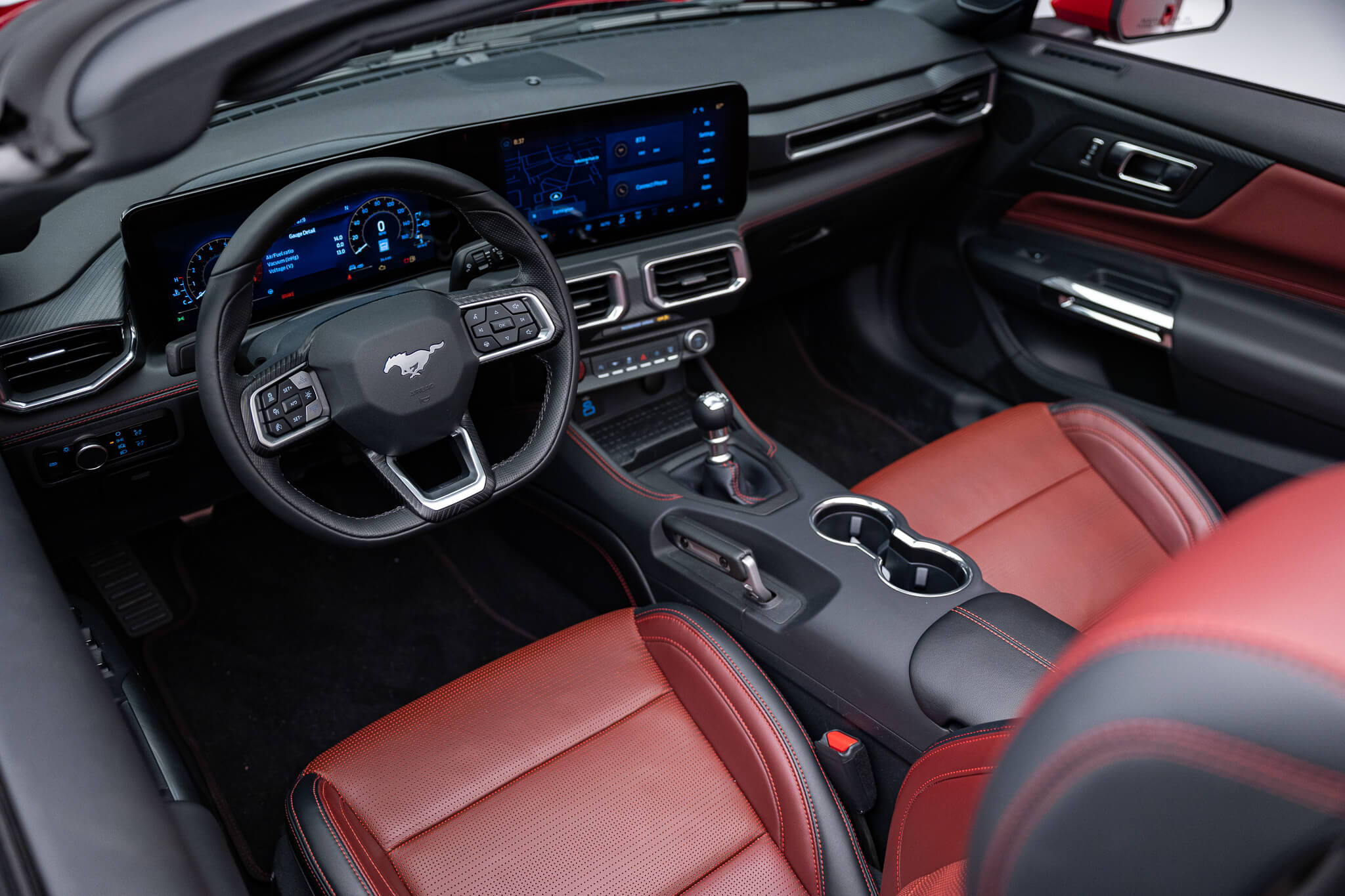
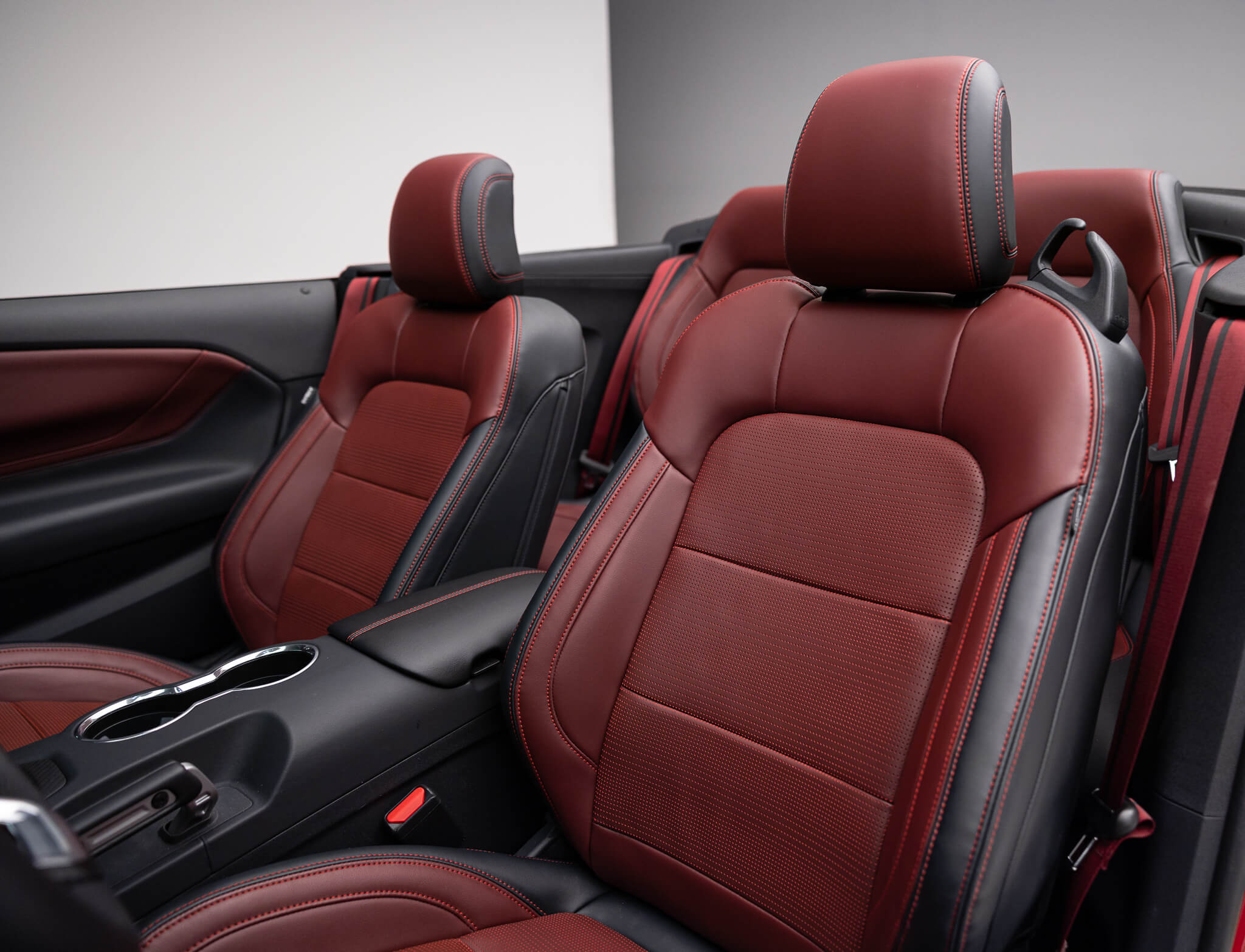
Carmine Red arrived with the seventh-generation Mustang for 2024 as one of the new interior themes introduced with the S650 redesign. It is a leather-trimmed seating option, and it is not available on base trims. You need to be in Premium territory to get it, which means EcoBoost Premium or GT Premium, and it continues to be offered that way into the 2026 model year on Premium trims.
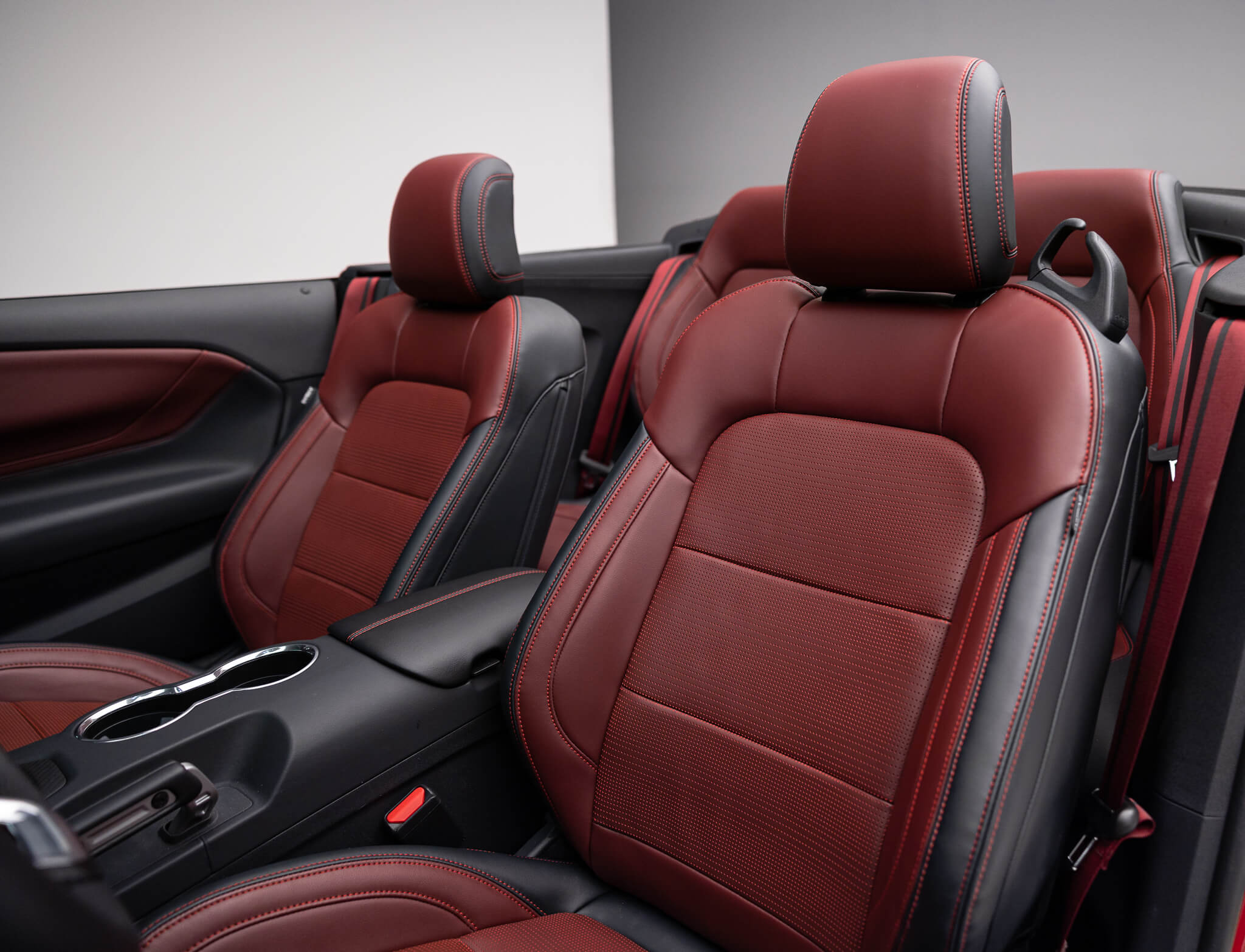
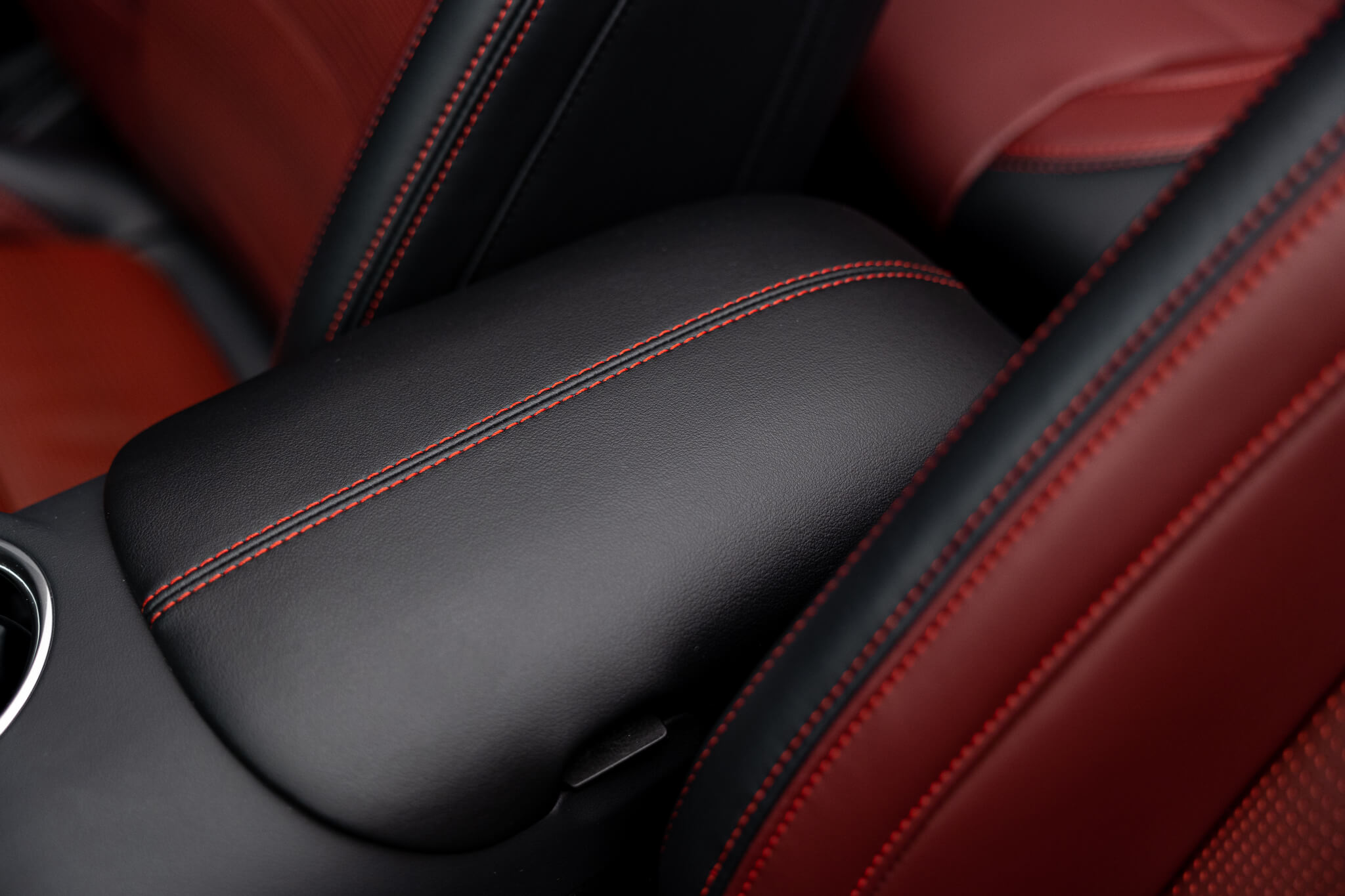
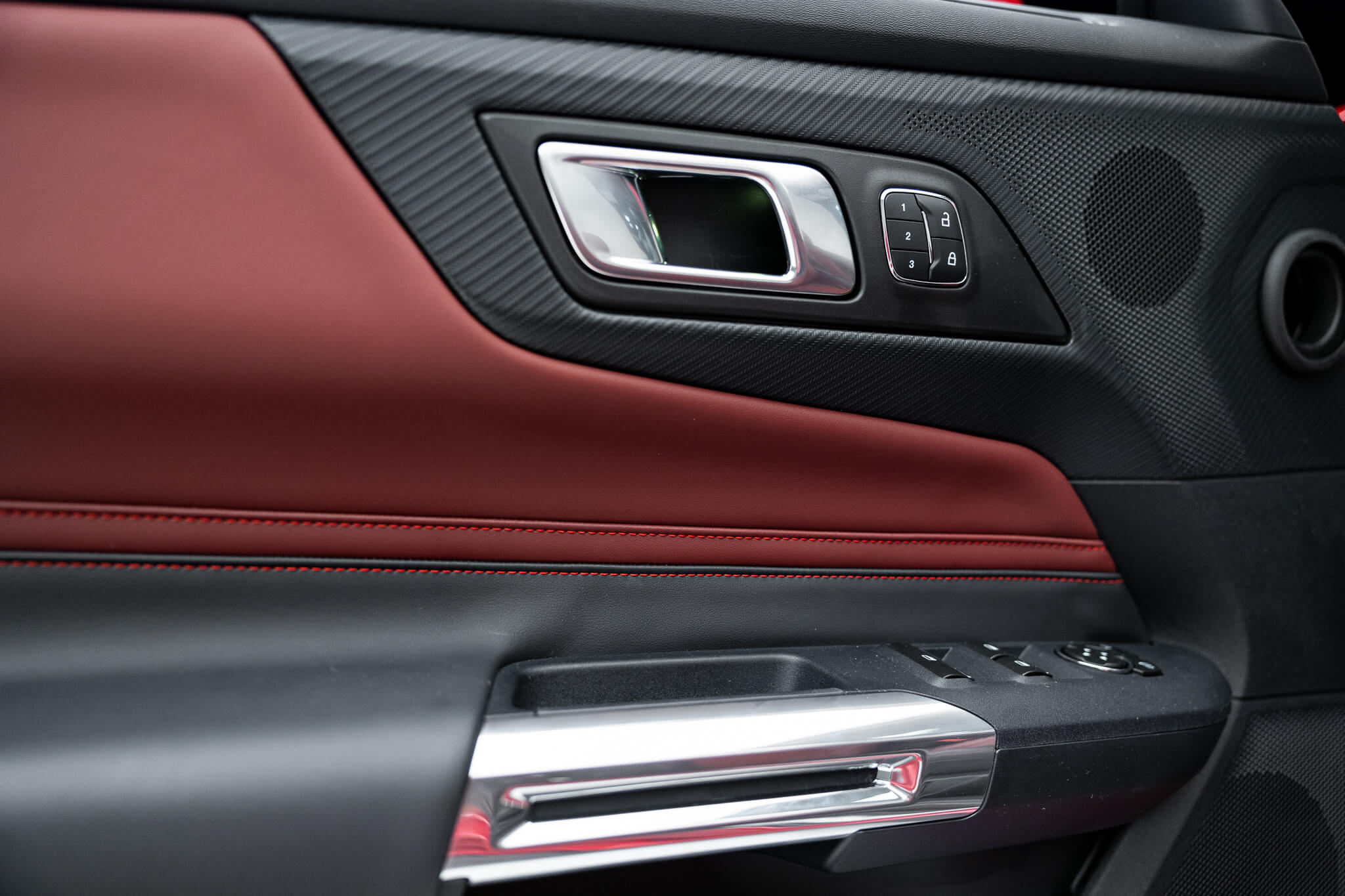
First, Carmine Red is not the bright, arterial red Mustang owners remember from the S550 era. It is deeper. Owners have described it as closer to wine or Bordeaux than fire-engine red, and that has been the most debated point about the color since the order guides went live. Some buyers wanted a louder red. Others specifically chose it because Ford toned the red down into something that reads more expensive and less costume.
The second thing to understand is that the color is not just on the seats. It runs through the interior trim pieces and is paired with brighter red accent stitching that deliberately contrasts with the darker leather. The door panels carry it. Some cars also got accent-colored seat belts as part of the same push toward personalization. When Ford expanded the S650 interior palette, the strategy was to make the cabin a styling choice rather than a default, and Carmine Red is the most aggressive expression of that.
If you want the full breakdown of how the S650 interior was reorganized, we covered the whole palette in our guide to everything you need to know about the 2024 Mustang interior.
Where the Name Comes From
Here is the part that almost never makes it into a color guide.
Carmine Red is a Ford color name that dates back to the Model T.
Between 1908 and 1913, the Model T was not available in black. That sentence tends to stop people, because the single most repeated fact about the Model T is the line attributed to Henry Ford about any customer having a car painted any color he wants, so long as it is black. That quote is real, and the policy behind it is real, but it describes the second half of the Model T story, not the beginning.
In the early years, the Model T came in red, blue, gray, and green. Ford also assigned colors by body style rather than letting buyers pick freely from a full chart. Gray was for the town cars. Red was for the touring cars. Green covered touring cars, town cars, landaulets, and coupes.

The red in question was Carmine. Model T paint references from the club and restoration world list Red/Carmine as a 1909 to 1914 body color, alongside Brewster Green Medium, Gray, and Midnight Blue, before black took over.

Image sourced from: Ford Piquette Plant
The Window Was Tiny
What makes a Carmine Red Model T genuinely rare is how short the window actually was.
The earliest 1909 cars were red and gray. By mid-1909, that gave way to dark green. Restoration references note that after June 1909, red was simply no longer available. Then in December 1910 and January 1911, the dark green shifted again to a dark, almost black midnight blue. By 1914 the black-only era had begun in earnest.
So the red Model T is not a general early-Ford phenomenon. It is essentially a first-year car. If you have stood in front of a Carmine Red 1909 Touring, including the one that sits on the main museum floor at the Ford Piquette Avenue Plant in Detroit where Model T production began, you were looking at a color Ford offered for a matter of months.
One more wrinkle is worth knowing. The paints Ford used on those early cars were varnishes, and varnishes do not age gracefully. Model T restorers openly acknowledge that original colors are close to impossible to duplicate accurately today, that the early greens and blues were so dark they could pass for black, and that even batches of the same formula varied. Which means the vivid red you see on a restored 1909 today is an educated interpretation, not a scan of a surviving panel. Even within the hobby, there is ongoing debate about exactly how bright Ford’s Carmine really was.
Why Ford Went Black
The color options disappeared because the Model T mattered in the first place.
Black paint was cheaper, dried faster, and held up better. On a moving assembly line, drying time is not a cosmetic detail; it is a throughput problem. Every hour a body spends waiting to cure is an hour it is not moving toward a customer.
There was a secondary benefit too. Painting every component black streamlined production, made quality control more forgiving because tone variation was harder to detect, and made scratches and imperfections easier to touch up. It also eliminated retooling for different colors. Ford did not kill color because he hated color. He killed it because color was friction.
That trade is the entire philosophy of the Model T compressed into one decision, and it is why the color story is worth telling. The Model T started with a palette and gave it up to become the car that put the world on wheels.
Is the Mustang’s Carmine Red an Intentional Revival?
This is where we have to be straight with you.
Ford has not publicly stated that the S650’s Carmine Red interior was named in reference to the Model T. There is no press release, design interview, or order guide footnote making that connection. Carmine Red is also a color name used broadly across the industry, from Porsche to Cadillac to Oldsmobile, and it has been for decades.
So the honest framing is this: the name is a genuine echo, not a documented revival. Ford reached into a color vocabulary it has been using since 1909 and put it back on a car window sticker roughly 115 years later. Whether a designer in Dearborn knew the lineage or simply picked a name that sounded right, no one outside the studio can confirm.
That doesn’t make it any less interesting. It makes it a better trivia answer, because it is true either way.
The Takeaway
The next time someone in a parking lot asks why your seats are red instead of black, you have a better answer than “it was the option I liked.”
Carmine Red is the color Ford offered on the touring car that started the company’s mass-production era, dropped inside of a year, buried under three decades of black, and put back in front of buyers on the seventh-generation Mustang. Whether Ford meant it or not, the pony car is currently the only vehicle in the lineup wearing a name the Model T wore first.
For a nameplate that has spent sixty years carrying the brand’s history forward, that feels about right.