2020-2022 Shelby GT500 Production Numbers: A Complete Breakdown
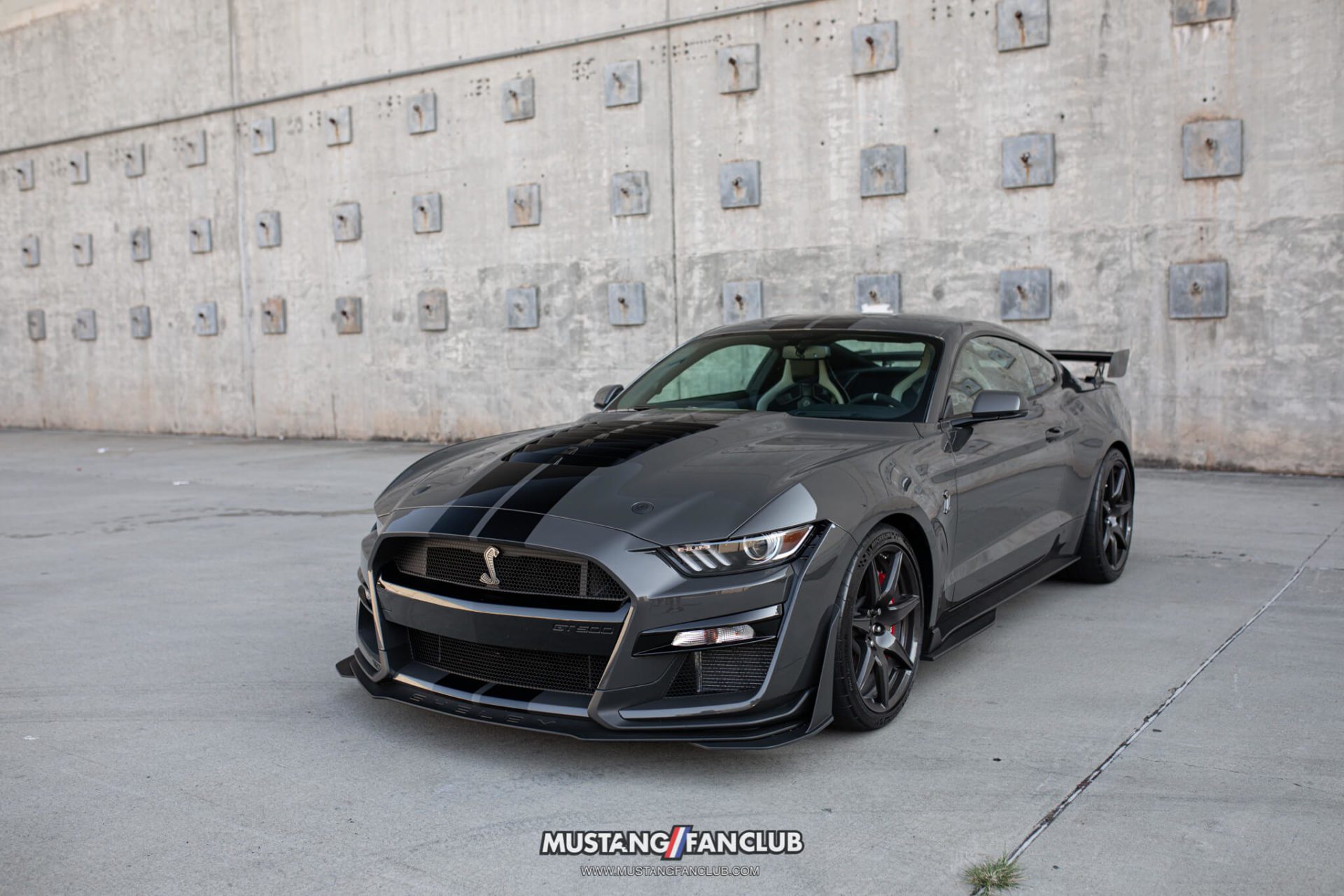
The 2020-2022 Ford Mustang Shelby GT500 picked up exactly where the previous generation left off and then some. Powered by a supercharged 5.2L Predator V8 producing 760 horsepower and 625 lb-ft of torque, paired with a TREMEC 7-speed dual-clutch transmission, this was the most powerful street-legal Mustang Ford had ever built. Over its three-year production run, Ford assembled approximately 14,130 GT500s at the Flat Rock Assembly Plant in Michigan. That total makes this generation significantly more exclusive than the 2007-2014 GT500 run, which saw nearly 48,000 units produced across eight model years.
Below, we’ve compiled production numbers for each model year of the 2020-2022 Shelby GT500, including breakdowns by package level, color, and Heritage Edition data where available. This resource is maintained by Mustang Fan Club and will continue to be updated as additional data becomes available.
Total Production by Model Year
The 2020 model year represented the highest-volume year for the S550 GT500, with approximately 5,860 total units produced. The last 2020 GT500 built carried chassis number 5823 and was delivered to Capital Ford in Charlotte, NC, wearing an Oxford White exterior with Kona Blue stripes. Production dipped in 2021 to approximately 4,265 units, then settled at 3,927 for the final 2022 model year. This declining production curve mirrors what Ford did with the GT350 across its own six-year run, where annual output peaked early and tapered as the model approached its final year.
Base GT500 vs. Carbon Fiber Track Pack (CFTP)
One of the most important distinctions in GT500 production data is the split between the base 900A GT500 and the 950A Carbon Fiber Track Pack (CFTP). The CFTP added carbon fiber wheels, an exposed carbon fiber GT4 rear wing, a Gurney flap, splitter wickers, and revised suspension tuning. It was a serious upgrade over the base car and required a special dealer allocation to order, making it inherently more limited.
Across all three model years, 4,142 CFTPs were produced: 1,383 in 2020, 1,209 in 2021, and 1,550 in 2022. That means roughly 29% of all GT500s left the factory with the Carbon Fiber Track Pack. For collectors and enthusiasts tracking rarity, the CFTP is the GT500 equivalent of the GT350R, and an interesting comparison exists between the two. Despite the GT350 having 66% more total production than the GT500 across twice as many model years, Ford actually built about 15% more CFTPs (4,142) than GT350Rs (3,647).
Color Availability and Rarity
Like the GT350 before it, the GT500’s production story really comes alive when you start looking at exterior color distribution. Ford offered between 11 and 14 color options depending on the model year, and buyer preferences varied significantly.
Shadow Black and Oxford White were consistently among the highest-volume colors across all three years, which aligns with broader Mustang buying trends. Ford Performance Blue was well represented across the entire run. On the other end of the spectrum, colors like Kona Blue (2020 only, approximately 234 units), Velocity Blue (available 2020-2021 but in low numbers), and Cyber Orange (2022) represent some of the lowest-production configurations. Grabber Yellow, available in 2021, also came in at notably low numbers.
Each model year introduced and retired specific colors, meaning some options only had a single year of availability. That one-year exclusivity is a major factor in long-term collectibility and resale value.
2022 Heritage Edition
The 2022 model year introduced the GT500 Heritage Edition, a tribute to the original 1967 Shelby GT500 designed by Charles McHose. Finished exclusively in Brittany Blue with Wimbledon White racing stripes, the Heritage Edition was initially marketed as a very limited offering. Final production numbers tell a different story: approximately 1,250 Heritage Edition GT500s were built for 2022, split between 649 base models and 601 CFTPs. That means the Heritage Edition accounted for roughly 31.8% of the total 2022 GT500 production.
While some buyers expected single-digit-per-state exclusivity (a narrative pushed at certain auction houses), the actual numbers were significantly higher. That said, the Heritage Edition remains a visually distinct and historically rooted variant that will carry long-term significance as the final special edition of the S550 GT500.

Stripe Options and Painted vs. Vinyl
The GT500 offered both painted and vinyl over-the-top racing stripes across all three years. Painted stripes carried a significant premium and were selected by a smaller percentage of buyers, making painted-stripe cars inherently less common than their vinyl or no-stripe counterparts. The specific stripe color options varied by model year and exterior color, and drill-down data on stripe combinations continues to be compiled as official Ford data becomes available.
Why Production Numbers Matter for GT500 Owners
For anyone buying, selling, insuring, or simply trying to understand where their car sits in the broader production picture, these numbers add real context to ownership. A Shadow Black base GT500 with no stripes and a Kona Blue CFTP with painted stripes exist in completely different production universes, even though both wear the same GT500 badge.
The 2020-2022 GT500 will likely follow the same trajectory as the 2003-2004 Terminator Cobra, a supercharged, IRS-equipped Mustang that shocked the performance world in its era and has only grown in collector value since. With just 14,130 units produced versus nearly 48,000 for the previous GT500 generation, the math favors long-term appreciation for well-kept examples, especially in rare color and package combinations.
How to Use This Data
The tables below break down production by model year, exterior color, and stripe option, where available. If you own a Shelby GT500 and would like to share images of your specific configuration, reach out to us at mustangfanclub@gmail.com. We are actively building a visual library to pair with this production data, so every combination is represented.
Production Numbers
Production Numbers
Production Numbers